


Discovering Huaca Pucllana: A Journey Through Peru's Ancient History
- Malena

- Jan 24
- 5 min read
Updated: Jun 6
Nestled in Miraflores, one of Lima’s best-known districts, Huaca Pucllana is a striking reminder that Peru’s ancient history isn’t confined to the Andes. It sits right in the middle of the modern capital! This pre-Inca adobe complex was built and used primarily during the Lima culture period (roughly 200–700 AD), with construction and peak activity commonly placed around the fifth century.
Made from adobe and clay, Huaca Pucllana offers a fascinating window into how coastal societies organised religion, power, and community life long before the rise of the Inca. In this article, we’ll explore the site’s history, why it matters, and what to expect when you visit.
Quick Facts at a Glance
Location: Miraflores, Lima
Also known as: Huaca Pucllana / Huaca Juliana
Main cultural phase: Lima culture (with later reuse by other groups)
Period: approx. 200–700 AD
Structure: stepped pyramid with 7 platforms, about 25 metres high
Built from: vast quantities of small adobe bricks
Modern research: systematic excavation and conservation from 1981; site museum inaugurated in 1984
A Glimpse into History
Huaca Pucllana is far more than a “pyramid.” It’s a large ceremonial and administrative complex that once sat within a landscape of irrigation, farming, and coastal life. Archaeologists primarily associate it with the Lima culture, a major civilisation that flourished on Peru’s central coast centuries before the Inca.
At the centre of the site is the iconic stepped pyramid: seven staggered platforms rising to around 25 metres. The design isn’t just monumental for the sake of it; it reflects control and organisation. Access points, plazas, enclosed areas, and elevated spaces suggest the site played a role in ceremony, authority, and governance.
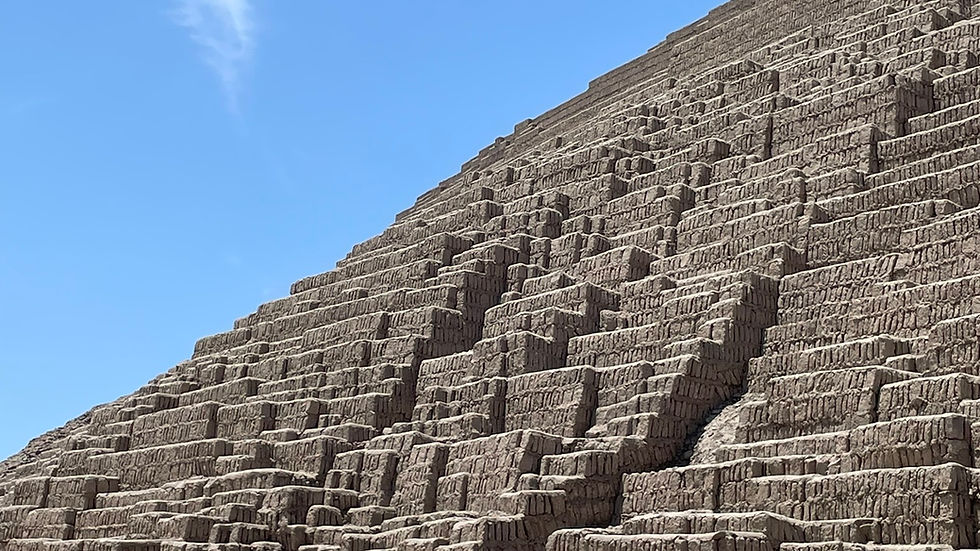
What makes Huaca Pucllana especially interesting is that it is layered. After the Lima culture period, later groups, commonly described as Wari and then Ychsma/Ichma, reused parts of the complex. That later activity (including burials and offerings) helps explain why excavations have uncovered such varied material across different areas of the site.
You may also see poetic claims online about the meaning of the name “Pucllana.” The safest, most accurate framing is this: “huaca” refers to a sacred place, while “Pucllana” is a local name whose exact origin is debated. What isn’t debated is the site’s sacred and ceremonial role; Huaca Pucllana was clearly a place where belief, ritual, and social order met.
Imagine the ceremonies once held here: carefully organised processions, offerings, and rituals, all set within a built environment designed to communicate meaning, hierarchy, and control.

Huacas in Lima: A Hidden Layer of the City
One of the best surprises about Lima is that Huaca Pucllana isn’t an isolated monument. The city is dotted with huacas and pre-Inca sites, some prominent, some tucked away behind walls and streets you’d never suspect.
For many visitors, Huaca Pucllana becomes the moment it clicks: Lima has a deep, visible pre-Inca story, and you don’t need to leave the city to feel it. That “ancient vs modern” contrast is part of what makes this visit so memorable.

The Architecture of Huaca Pucllana
Huaca Pucllana’s design is impressive not only for its scale but for the method used to build it. The complex is made from enormous quantities of small adobe bricks, combined with fill materials such as sand and stones.
The “Bookcase” Method (Técnica del Librero)
A standout detail is the brick placement method often referred to as the técnica del librero (“bookcase technique”). Many of the small adobe bricks were positioned upright, like books lined up on a shelf. It’s a distinctive look, and it’s frequently highlighted as a practical approach to building large earthen monuments in a seismic region.
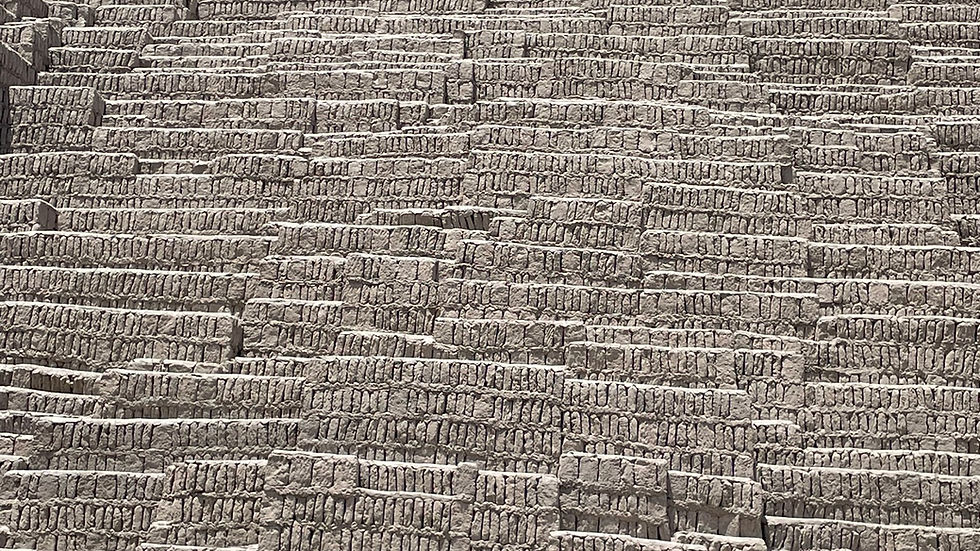
Look closely, and you’ll notice the bricks weren’t laid like modern masonry. They were positioned deliberately, creating stability, texture, and a visual rhythm that makes the structure feel both engineered and artistic.
What Were the Platforms For?
The seven platforms likely supported different activities, with the upper levels associated with higher-status functions and ceremonies. As with many archaeological sites, some details remain interpretive, but the overall picture is clear: this was a carefully managed complex, built for purpose, not simply a mound or a monument.

Why Huaca Pucllana Matters
Huaca Pucllana is one of Lima’s most important windows into pre-Inca coastal civilisation. It helps researchers interpret:
how the Lima culture organised sacred space
how authority and ritual were expressed through architecture
how later groups adapted older ceremonial landscapes for new purposes
It also matters for another reason: it’s a success story of heritage protection in a growing city.
A Living Conservation Project

Huaca Pucllana isn’t simply a ruin preserved in time; it has been systematically researched and conserved since 1981, with the long-running programme led for many years by Dr Isabel Flores Espinoza. The Museo de Sitio Pucllana was inaugurated in 1984, supporting public education and the ongoing work of excavation and interpretation.
In a city constantly reshaped by development, the site stands as a reminder that the past is part of Lima’s present and worth protecting. Work is still underway!
Visiting Huaca Pucllana

The on-site museum might be small, but it adds real depth. It connects what you’re seeing outside—walls, platforms, ramps, spaces—with the material evidence recovered through decades of work. If you want the experience to feel like “a story” rather than “a structure,” the museum is what bridges the gap.

Helpful Tips to Make the Visit Better
Go in late afternoon if you like warmer light on the adobe textures.
Bring water and sun protection; shade is limited.
Take your time with the contrasts: from certain angles, you can frame the huaca against modern Miraflores for a very “Lima” photograph.
If you’re planning a specific schedule, it’s sensible to check the latest visiting arrangements before you go, as heritage sites can adjust access for conservation.
A Nice Extra
Many visitors also choose to pair the visit with the well-known restaurant overlooking the huaca within the site, which offers a unique perspective. Imagine dining beside an ancient ceremonial complex in the middle of modern Lima! There are other restaurants nearby too.

If You Enjoyed Huaca Pucllana…
Huaca Pucllana often sparks a bigger curiosity: What else is hidden in Lima? If you’d like to continue the theme, there are other huacas within the city (such as Huaca Huallamarca in San Isidro) and larger pre-Inca ceremonial centres nearby (such as Pachacámac) that make a brilliant follow-on day trip.
Embracing the Past
Huaca Pucllana offers more than a glimpse into an ancient world; it invites us to connect with the people who built it and the layers of history that followed. Whether you’re fascinated by archaeology or simply curious about Peru beyond the usual highlights, the site offers an enriching, grounded experience. It quietly changes how you see Lima.
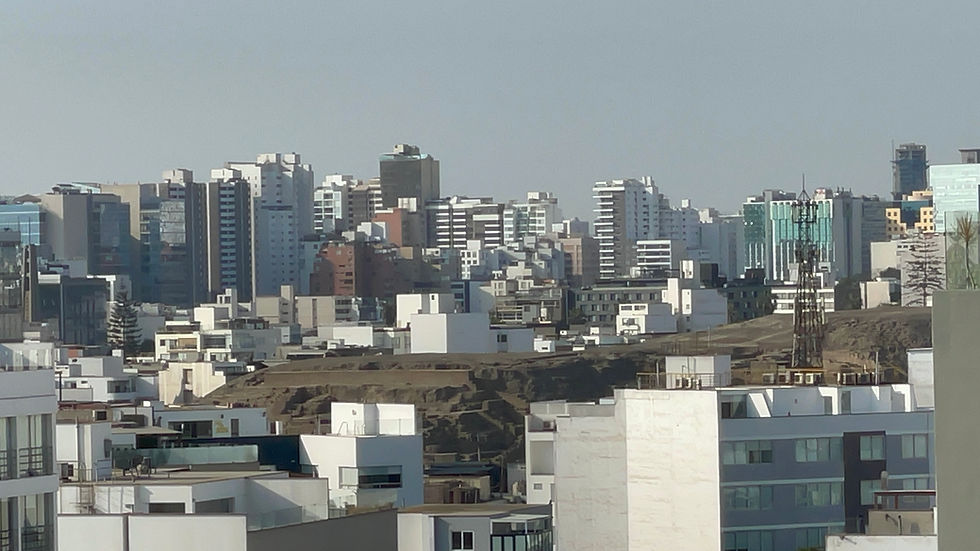
In an ever-evolving world, Huaca Pucllana encourages us to pause, reflect, and recognise that even in the heart of modern Lima, the past still has a voice.
Malena x
Ready to explore more of Peru? Subscribe below to receive my latest travel tips, or browse our regional guides to discover what lies beyond the capital.

Purely Peru – Celebrating Heritage & Culture
Discover more at purely-peru.com


Hi, looks like a stunning location. Are there any good restaurants nearby?
Cheers
Bob