


Discovering the Chimú Sacred Road: A Journey Through History

Updated: Jun 6
Mapping the Sacred Path and Its Connections
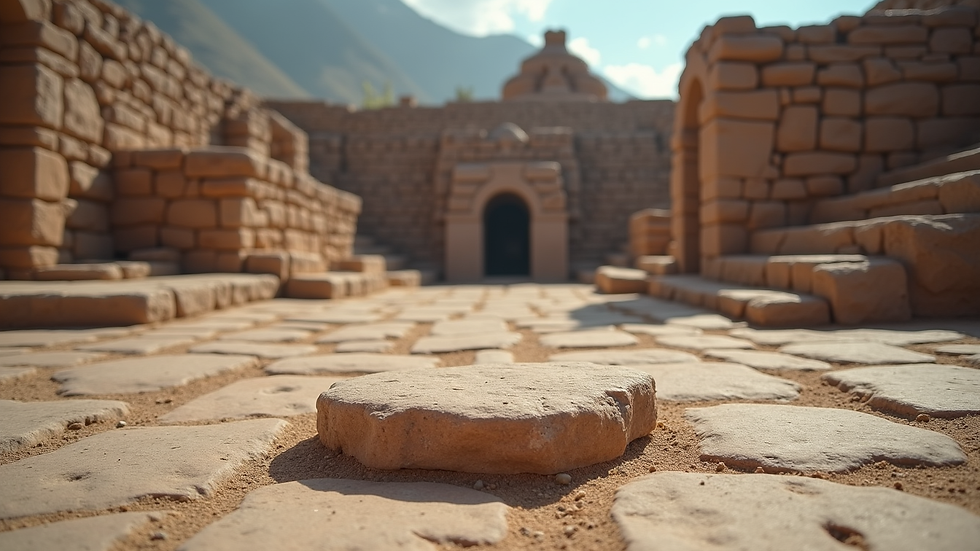
The camino ritual is not just a path but a physical link between key elements of Chimú society. The ritual road appears to connect the fortified settlement of Cerro Lescano with surrounding cultivated fields. It forms part of a wider ceremonial-agricultural landscape that also includes a platform and plaza. From there, the road runs through extensive agricultural fields irrigated by secondary canals branching from the Gran Canal de la Cumbre, part of a major hydraulic system. These fields feature serpentine furrows, indicating advanced agricultural planning.
The wider complex also includes a ceremonial sector, highlighted by a large stone platform measuring about 40 by 50 metres and a rectangular plaza of around 100 by 80 metres. This ceremonial space may have served as a focal point for public gatherings and rituals linked to agricultural cycles and the organisation of work.
The Significance of the Ritual Road
This discovery is important because it suggests a close relationship between settlement, agriculture, and ceremonial space within a single organised landscape. Such integration shows how the Chimú state may have coordinated labour and maintained control across different sectors. Researchers believe the road may have been used for ceremonies or processions linked to agricultural cycles, labour organisation, and ritual authority.
The Chimú polity was active on Peru’s northern coast between about AD 900 and 1470, before the Inca conquest. This new find adds to our understanding of how the state managed resources and people to sustain its power.
Hydraulic Engineering and Statecraft
The irrigation system connected to the camino ritual highlights the Chimú’s expertise in hydraulic engineering. The Gran Canal de la Cumbre supplied water to vast agricultural lands through a network of secondary canals. These canals supported intensive farming in an arid environment, ensuring food production for the population and the elite.
The serpentine and comb-shaped furrows point to intensive agricultural planning and careful use of irrigation. This level of agricultural planning suggests coordinated labour and a high degree of central organisation within the Chimú state.
Threats to the Site and the Need for Emergency Archaeology
Despite its importance, the site faces immediate threats from modern infrastructure projects. High-voltage transmission towers, service roads, and other modern activity are encroaching on the archaeological landscape, risking irreversible damage. This situation makes the site a priority for emergency archaeology, where rapid documentation and preservation efforts are essential.
Protecting this discovery is crucial not only for understanding Chimú culture but also for preserving Peru’s rich heritage. Archaeologists and local authorities must work together to balance development with conservation.
What This Discovery Means for Archaeology and History
The camino ritual and its connected complex offer a rare glimpse into how the Chimú state combined ritual, agriculture, and settlement planning. It expands current understanding of how ceremonial, agricultural, and settlement spaces could be integrated in Chimú landscape planning, suggesting a deliberate effort to reinforce state power and social order.
For historians and archaeologists, this find opens new avenues for research into Chimú governance, labour organisation, and religious practices. It also highlights the importance of landscape archaeology in understanding ancient societies.

The Cultural Legacy of the Chimú
The Chimú civilization left an indelible mark on Peru's history. Their achievements in agriculture, engineering, and social organisation are a testament to their ingenuity. The sacred road is more than just a physical structure; it embodies the spirit of a society that thrived in harmony with its environment.
As we explore the connections between the Chimú and their landscape, we uncover the rich tapestry of their culture. Each stone, each furrow, tells a story of resilience and creativity. The legacy of the Chimú continues to inspire us today.
Final Thoughts
The discovery of the Chimú sacred road in the Chicama Valley highlights how engineering, agriculture, and ritual may have been closely connected in Chimú territorial planning. It stands as a testament to the Chimú’s ability to organise complex systems in a challenging environment. Protecting this site is vital for future generations to appreciate the ingenuity of this ancient culture.
Malena x
Ready to explore more of Peru? Subscribe below to receive my latest travel tips, or browse our regional guides to discover what lies beyond the capital.

Purely Peru – Celebrating Heritage & Culture
Discover more at purely-peru.com
Comments