


Christmas in Peru: A Unique Celebration
- Malena

- Dec 25, 2025
- 4 min read
What Christmas in Peru Feels Like
In Peru, Christmas is deeply family-centred and wonderfully social. The biggest difference for many visitors is the timing: Christmas Eve (Nochebuena) is often the main event, with dinner and gift-giving happening late at night, sometimes right at midnight.
And while it’s “summer Christmas” in Lima and much of the country, Peru’s geography matters. Coastal evenings can be mild-to-warm, the Amazon is humid, and Andean cities can feel cool once the sun drops. So, Christmas doesn’t look (or feel) the same everywhere.
What you’ll notice most?
Late-night family gatherings
A festive buzz in neighbourhoods
The smell of holiday food and sweet bread
Fireworks and noise around midnight in many places
Nochebuena in Peru: The Heart of the Holiday
For many Peruvian families, the 24th is the day everything builds towards. People spend the afternoon preparing food, tidying the home, setting up decorations, and getting ready to host relatives.
A typical Nochebuena often looks like this:
Dinner starts late (often around 9–11 pm).
Midnight is the big moment: gifts, hugs, fireworks in many neighbourhoods, and sometimes church.
Children may be told that “El Niño Jesús” brings presents, although Papá Noel/Santa is also common, especially in urban areas.
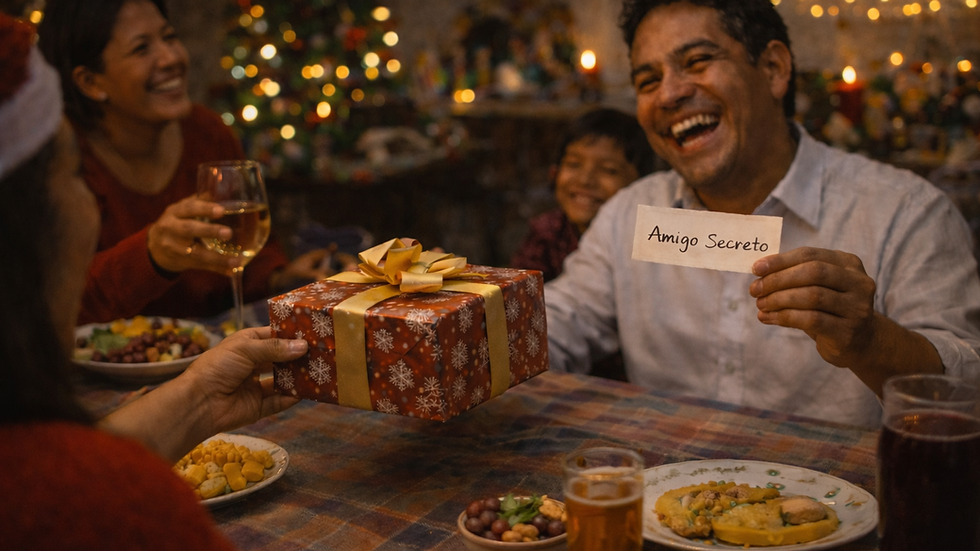
In many Peruvian households, amigo secreto adds extra laughs. Each person buys one present, drops a few clues, and the recipient has to guess who their “secret friend” is before they get the gift.
This contrasts with the UK and USA, where the 25th often takes centre stage, especially for morning present-opening.
The Christmas Table: Flavours You’ll Remember
Food is a major character in a Peruvian Christmas—generous, shared, and proudly “ours.” Common centrepieces include roast turkey (pavo) or roast pork (lechón), often paired with festive sides that are less common in the UK/US, such as arroz árabe (spiced rice with raisins/nuts/noodles) and salads like ensalada rusa in many homes.

Panetón and Hot Chocolate: The Classic Pairing
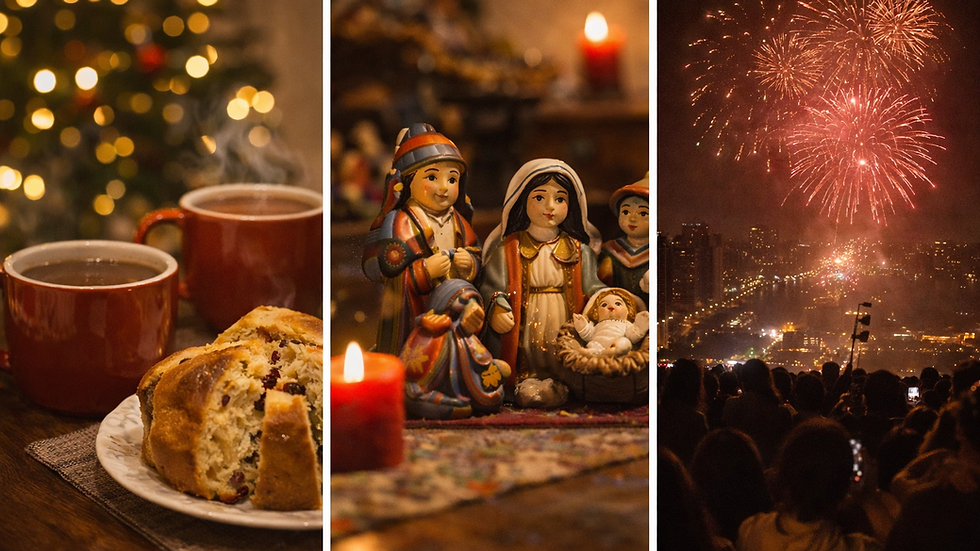
No matter where you are in Peru in December, you’ll almost certainly see panetón everywhere—homes, shops, offices, and gift bags. It’s traditionally eaten with hot chocolate, and it’s one of the most recognisable modern Christmas traditions in Peru.
Did You Know?
Peru is frequently cited as one of the world’s biggest panetón consumers per person. This is a remarkable twist for a bread that originated in Italy but became a December staple in Peru.

Faith and Meaning: Nacimientos and Misa de Gallo
Even if your Christmas is more “food and family” than “religious observance,” it’s hard not to notice how present faith can be in Peru at this time of year. Many households display a Nacimiento (nativity scene), sometimes simple, sometimes elaborate, and often with local flair (especially in the Andes).

Midnight Mass, commonly called Misa de Gallo, is also an important tradition in many communities, along with New Year celebrations.

Chocolatadas: Christmas Generosity in Action
A very Peruvian tradition you may come across is the chocolatada. These are community events where hot chocolate and panetón (and often small gifts) are shared, especially with children and families who need support.

Santurantikuy in Cusco: Christmas Eve Artisan Magic
If you’re in Cusco around the 24th, you might hear about Santurantikuy, a famous Christmas-time artisan fair centred on nativity figures and Andean crafts. It’s one of those experiences that instantly explains how Peru blends Catholic tradition with local artistry.

Christmas Day (25 Dec): A Calmer Affair
After the late night of Nochebuena, the 25th is often calmer. Families sleep in, visit extended family, snack on leftovers, and enjoy a slower pace. This is one of the biggest “rhythm shifts” compared with the UK and the USA, where Christmas Day is often the busiest and most scheduled day.
Regional Variations Across Peru
Peru’s diverse geography means Christmas celebrations vary by region:
Coast and Lima: Expect lively streets, fireworks in some areas, and a festive atmosphere that often spills into neighbourhoods.
Andes: Families may include tamales and local corn-based dishes, with cooler nights encouraging indoor gatherings.
Amazon: Celebrations may feel more community-focused and regional, with local foods and neighbourhood events.
Many places share the core traditions of family, food, and faith, but local flavours and customs add rich variety.
How Christmas in Peru Differs from the UK and USA
Aspect | Peru | UK & USA |
Despite these differences, the spirit of togetherness and kindness is a shared thread across all cultures.

A Typical Peruvian Christmas Eve Timeline
Afternoon: Final preparations for dinner, decorating the home and nativity scene.
Evening (7–9 pm): Families gather, sometimes visiting neighbours or attending early church services.
Late evening (9–11 pm): The big Christmas dinner begins, featuring traditional dishes.
Midnight: Gifts are exchanged, fireworks light up the sky in many neighbourhoods, and many attend Misa de Gallo.
After midnight: Socialising continues with music, dancing, and sharing panetón and hot chocolate.
Practical Tips for Visitors
Book accommodation and restaurants early: Christmas is a busy time, especially in Lima and popular tourist spots.
Bring a small gift: If invited to a Peruvian home, a thoughtful gift like sweets (or something you can share, like dessert) is appreciated.
Expect late nights: Nochebuena celebrations often run past midnight.
Try local foods: Don’t miss panetón and hot chocolate, a festive must-have.
Respect religious customs: Many attend Misa de Gallo; visitors are welcome but should be mindful of the solemnity.
If you’re sensitive to noise (or travelling with children/pets), consider earplugs, as midnight fireworks can be loud in some areas.
Final Thoughts: Christmas the Peruvian Way
Christmas in Peru shows that the season doesn’t need snow to feel magical. From Nochebuena celebrations to panetón with hot chocolate and colourful nacimientos, it’s a festive period full of meaning and warmth.
For more Peruvian culture and travel inspiration, explore our other blogs and follow Purely Peru on our social media channels for quick updates and seasonal highlights.
Malena x
Ready to explore more of Peru? Subscribe below to receive my latest travel tips, or browse our regional guides to discover what lies beyond the capital.

Purely Peru – Celebrating Heritage & Culture
Discover more at purely-peru.com


Looks like a brillant time to be in Peru. What's the weather like at that time of year?